2018年10月22日星期一

Ddu College——WHO vaccine pre-certification How to conduct effective consultation?

"/

From November 1st to 2nd, 2018, the annual World Health Organization (WHO) Prequalification (PQ) consultation will be held in Kunming, China. Unlike previous years, this year's consultation will only take the one-on-one format, namely the World Health Organization Vaccine Pre-Certification Review Team and small meetings of various domestic vaccine manufacturers. Although the part of the centralized consultation meeting will be cancelled, which means companies and international organizations are unable to discuss and share the importance of pre-certification, but it’s believed that after several years of consultations, everyone has already cooked up the importance and significance of pre-certification. Evidence? This year's 14 vaccine manufacturers actively participate in the one-on-one consultation is the best proof.
As of November 2018, there were 4 manufacturers and vaccines that successfully passed the pre-certification of vaccines in China, namely, Chengdu institution’s Yinao, Hualan's Liugan, Kexing's Miejia and Beishengyan's bOPV.
At the PQ consultation meeting in Beijing last year, Ddu was fortunate to hear the pre-certification experience sharing between Kexing and Beishengyan. The biggest achievement was to realize the importance of the pre-submission meeting. That is, before the formal PQ declaration, the company needs to conduct multiple communication and consultation with the WHO review team to ensure understanding of the requirements of the WHO pre-certification, and to conduct gap analysis according to the actual situation of the enterprise, and then hire an expert consultant team to carry out the consult service.
Then what Ddu wants to say to everyone is how to do an effective consultation?
First of all, companies need to specify whether the vaccine to be declared for PQ is included in the Vaccines prequalification priority list. If it is included, it can be declared. If it is not included, companies can also communicate with the WHO review team. The WHO review team will take the medical product itself, the international needs and many other aspects into consideration, then make the decision about whether to accept the company's declaration.
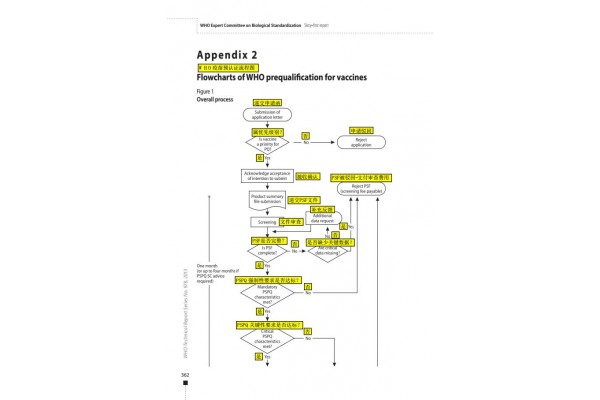
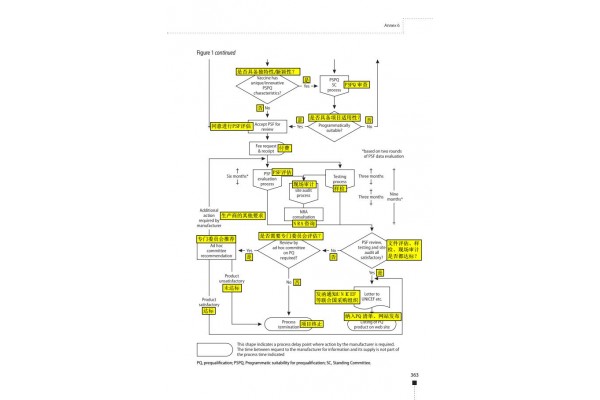
Secondly, after determining the eligibility for declaring, companies need to fully understand the basic processes and requirements for WHO vaccine pre-certification (see Annexes I and II). In order to better promote the participation of Chinese vaccine manufacturers in the pre-certification of the WHO, the WHO Office in China has set up an expanded immunization planning group to support the pre-certification declaration projects of domestic vaccine manufacturers. Enterprises should actively contact the WHO Office in China to communicate with each other, accurately understand the pros and cons of vaccine pre-certification, processes, and requirements, and determine whether to initiate pre-certification projects after repeated consultations.
Thirdly, after confirming the start of the pre-certification project, the company should prepare a comprehensive consultation of the manufacturer and the product. Specifically, it includes preparing a set of product documents to be declared for PQ, covering all aspects of its plant facilities, research, and development, production, quality control, stability, non-clinical, clinical, etc., and preparing a PPT and consultation list for an introduction. Introduce the basic situation of the product through one-on-one consultation with the WHO review team. Preliminary assessment of the gaps and possibilities of PQ filings through questions and forms of questions and answers.
Next, based on the results of the comprehensive consultation, the company conducts a gap analysis of the existing situation, clarifies the focus and priority of the next project along with the conduction of specific consultation. Usually, the gaps among the enterprises are in the clinical aspect, such as the lack of continuous three batches of consistency in production scale, non-inferiority, combined vaccination, and other tests and data. Therefore, clinical consultation should be given priority to determine which clinical trials need to be supplemented. At the same time, companies should also hire a team of consultants to conduct special GMP simulation inspections and quality consultations to assess whether there are process changes or workshop modifications.
Finally, after both comprehensive consultation and specific consultation, the company can clearly recognize its own gaps and make necessary rectifications to meet the requirements of the WHO pre-certification declaration. Therefore, an effective pre-submission meeting is essential, and companies should fully grasp the opportunity of each pre-submission meeting!
Ddu hopes that everyone can learn more about WHO vaccine pre-certification after reading this article, so that more and more companies can successfully pass pre-certification, let our excellent vaccine varieties go abroad and be recognized by more countries around the world!
"/
"/
Annex II
WHO Vaccine Pre-certification Description
The process of WHO vaccine pre-certification is roughly divided into the following six steps:
1.Submit an application
Submit an application letter to express the intention of the manufacturer to conduct product pre-certification qualification assessment.
The time for submitting the application letter is not limited, but it is required to state the estimated time when the product documentation can be provided.
2.Seminar
The manufacturer, the head of the State Food and Drug Administration (if any), and the head of the WHO will participate in the discussion. At the meeting, the manufacturer can consult on the issues related to pre-certification.
Manufacturers can raise their own needs, and WHO arranges assessment meetings based on the needs of manufacturers.
3.Product summary file(PSF
If the application letter is approved, the manufacturer must prepare and submit a product profile (1 paper file and 5 electronic files in CD format). The document is subject to the WHO format as follows:
■ Chapter 1: General information;
■ Chapter 2: Personnel;
■ Chapter 3: Premises and equipment;
■ Chapter 4: Vaccine composition, presentations and schedules;
■ Chapter 5: Production;
■ Chapter 6: Quality control;
■ Chapter 7: Stability;
■ Chapter 8: Clinical experience;
■ Chapter 9: Production and distribution data;
■ Chapter 10: Update on regulatory actions.
Remarks:
  1. Recognize and accept the CTD format. If the CTD format is used, the file should cover all the contents of the PSF.
  2. The time node for submitting product information is January 31, May 31 and September 31 of each year.
3.1 PSF document review (1-4 months)
(1) Review the completeness and standardization of PSF documents. There will be 2 rounds of document review.
If the first round does not pass, WHO will issue a formal notice to inform the manufacturer that the documents have been rejected and require the manufacturer to pay the corresponding review fee
If the first round of review is passed, there is no need to pay the review fee. After the second round of evaluation, the WHO will issue a formal notice to the manufacturer to review the document and ask the manufacturer to pay the corresponding review fee.
(2) Review the applicability of the project.
The Pre-certification Program Applicability Evaluation Committee (PSPQ) will evaluate the key attributes, uniqueness and innovation of the product. The recommendation letter of PSPQ is of great significance to the approval of WHO.
If the information is insufficient, the manufacturer must provide supplementary feedback to the expert's evaluation within one month for follow-up review. If passed, PSPQ will issue a formal notice to inform the manufacturer to pay the corresponding review fee.
If the review fails, PSPQ will issue a formal notice to inform the manufacturer that the application has been rejected and ask it to pay the corresponding review fee, and WHO will destroy the PSF file.
3.2 Evaluation of PSF documents (6 months)
(1) The first round of document evaluation takes 3 months. If the information is insufficient during the evaluation process, WHO will require the manufacturer to provide supplementary feedback (submitted in 1 paper file and 5 CD format electronic files). If the manufacturer fails to replenish within 3 months, WHO will terminate the assessment.
(2) The second round of document evaluation took 3 months to refer to the evaluation of the complete document after receiving additional feedback.
4 sample inspection (3 months from the date of submission of the sample)
After the PSF document review and evaluation is passed, the manufacturer must provide a certain number of samples (ranging from 25 to 200), requiring 3-5 batches in succession, as well as sample accompanying materials (batch record summary, test method SOP, reagent) , standard products, etc.)
5 On-site audit (taken within 2 months after passing the sample test)
The inspection report will be sent to the manufacturer within one month after the inspection, and will be copied to the State Food and Drug Administration. If corrections are needed, WHO will provide feedback on the rectifications, and manufacturers will need to submit feedback by the deadline.
6 results evaluation
If the assessment is approved, WHO will issue a letter to the UN agencies and relevant organizations stating that the vaccine product meets the requirements of the WHO and UN agencies, and is approved and confirmed by the SFDA, and a report will be presented to supplement the facts.
The vaccine will be included in the vaccine pre-certification list.
The pre-certification qualification is valid until the WHO initiates a reassessment.
from Drugdu  https://goo.gl/QgQoHk

2018年8月30日星期四

Restart of Measles Vaccination can Prevent an Outbreak

"/

Physician Andrew Wakefield reported in 1998 that the measles vaccine leads to autism. Even though his research was discredited, the damage was done and there came a fall in measles vaccinations due to which the prevalence of measles increased.
In the first half of 2018, there was a major increase in the prevalence of measles in Europe, where 41000 people were affected followed by 37 deaths. The U.S. Centers for Disease Control and Prevention (CDC) announced that more than 100 people were affected with measles in Columbia in the USA along with 21 other states.
Due to this drastic rise, parents are becoming more concerned about the risks this poses to their school going children. Dr. Michael Brady, an infectious disease expert from Nationwide Children’s Hospital claims that the MMR vaccine will effectively prevent another outbreak. By reducing the cost, it is mandatory to enforce vaccination.
Dr. Michael Brady said, “One of the issues that’s problematic is that we have large numbers of children in the United States who are immunocompromised for a number of different reasons. They’re getting treated for their cancer. They have an HIV infection or they’re born with a problem in their immune system. These children can’t receive the vaccine, and so if they’re exposed to a child who has measles, they can get very, very severe disease and, not infrequently, die.”

from Drugdu  https://goo.gl/QgQoHk

2018年8月28日星期二

Debunking Myths about Vaccines and Autism

"/

To understand the relation between vaccines and autism, one must understand what Autism Spectrum Disorder is.  Autism Spectrum Disorder (ASD) is a disability encountered by children and young adults during their developmental stages. It results from discrepancies in the functions of the brain.
The communication, interaction, behavior and learning of an autistic person are affected. There are differences in the above functions among autistic people as well. The CDC’s Autism and Developmental Disabilities Monitoring Network data shows that nearly one in 68 children have ASD in all groups and ethnicities in the United States.
Concerns have been raised in the past over the association between ASD and vaccines that are given to children. These queries have engendered from a 1998 paper published in the Lancet by Dr. Andrew Wakefield and his colleagues, which examined 12 children referred to the Royal Free Hospital and School of Medicine who had been long suffering from enterocolitis and regressive developmental disorder. The authors noted that the parents of 8 out of 12 children linked their hampering of acquired skills, like language, to the MMR vaccination. The study concluded that “likely environmental causes” (i.e. the vaccine) were linked to the occurrence of the gastrointestinal illness and the regression in development.
12 years later, the Lancet withdrew the paper from its journal after it was proven that “several elements” from the paper “are incorrect, contrary to the findings of an earlier investigation.”
Several later studies proved that these claims are false and the study had numerous flaws. Moreover, a 2011 study by the Institute of Medicine (IOM) showed that eight vaccines administered to children and adults were found to be harmless, excluding rare exceptions.
A study conducted by the CDC in 2013 complemented the above research proving that ASD is not linked with vaccines. The focus of this study was on the antigen count in the vaccines given to children up to two years of age. It was found that the end count of antigen in children having ASD and those devoid of ASD remained the same whether they were immunized or not.
Several allegations linking vaccines to autism have also been based on the presence of a much-studied ingredient, thimerosal. Thimerosal is a preservative made from mercury which is specially combined to avert adulteration of multiple dose vaccine ampoules. However, umpteen studies have concluded that ASD is not a resultant of thimerosal use in vaccines.
The IOM conducted a thorough review in 2004 which revealed that “the evidence favors rejection of a causal relationship between thimerosal-containing vaccines and autism.”
The CDC has either funded or conducted nine research studies since 2003, which have failed to find any connection among vaccines that have thimerosal and ASD, and also no association of the measles, mumps, and rubella (MMR) vaccine with ASD in immunized kids.
In a bid to limit the contact of the country’s children with any kind and all amounts of mercury, from the period spanning 1999 to 2001, all vaccines meant for children, apart from few flu vaccines, were not added with thimerosal or its amount in the vaccines was largely reduced. This exercise was conducted, with a preventive motive, before the safety of thimerosal was proved.
Following are few synopses of studies related to thimerosal conducted or funded by the CDC:
A study evaluating the relation between brain function, behavior, language, coordination and thimerosal: It assessed children who were exposed to thimerosal early after birth and the neuropsychological effects were observed after 7-10 years. It concluded that there are no links between thimerosal and intellectual capabilities, speech and memory, fine motor skills. The study found no associations with thimerosal and general intellectual functioning, verbal memory, fine motor coordination, decision-making, working, conduct regulation and language. However, an insignificant link was observed between thimerosal exposure early in life and occurrence of tics in boys but not in girls.
Contact with Thimerosal in the womb and in infancy: This research studied exposure to Thimerosal during gestation and in infant life via vaccines and immunoglobulins and risk of Autism. Children having autism were compared with those not having it, and the exposure of the child in the womb and also in infancy to thimerosal via vaccines was observed. The study findings revealed no variations in exposure to thimerosal among children having and devoid of Autism.
Neuropsychological Performance 10 Years After Immunization in Infancy With Thimerosal-Containing Vaccines: This was a follow-up study conducted in Italy which was funded by the CDC which contrasted neuropsychological results in children grouped randomly to be administered either diphtheria-tetanusacellular pertussis vaccine (DTaP) containing thimerosal or DTaP containing 2-phenoxyethanol up to one year of age. Both the divisions were tested for 24 neuropsychological outcomes ten years post the vaccination. Findings concluded thimerosal to be harmless to children.
Long-term results of thimerosal exposure in US, UK, and Denmark: Major epidemiological studies that evaluated information from the US health maintenance organizations, the UK General Practice Research Database, and the whole nation of Denmark did not reveal a link between exposure to vaccines containing thimerosal and autism.
Presently, thimerosal is present in flu vaccines which are enclosed in multiple dose ampoules. There are few substitutes which offer no addition of thimerosal to it.
Other vaccine additives have also been blamed to be causing ASD but there has been no evidence to prove so.

from Drugdu  https://goo.gl/QgQoHk

2018年8月20日星期一

Safety of Biological Vaccines During Floods & Power Failures

"/

The Centre for Biologics Evaluation and Research (CBER) has provided information regarding the usage and storage of temperature-sensitive bio-products during power failures or floods. People should pay attention before using a product since it is mandatory to check expiry status. Also, to not cause unnecessary shortages, products shouldn't simply be discarded to power failures as this may not affect the product.
Most products such as bacterial and viral vaccines, plasma derivatives etc., should either be refrigerated or frozen with some also being stored at room temperature.
Most refrigerated vaccines can remain stable at room temperature for shorter durations. It is highly recommended to keep a thermometer in the refrigerator to keep an eye on the temperature. If you encounter any issues, you are advised to contact the manufacturer regarding the product stability.
If a power failure occurs, remember not to open the freezer/refrigerator until the power has been restored as this will help to maintain low temperatures for a longer period of time.
When the power has been restored, record the temperature immediately and at regular intervals until it reaches the recommended range. Also record the duration of increased temperature exposures.
In case of an anticipated flood, bio-products kept at room temperature should be stored on an elevated level to maintain dryness. Refrigerators used to store vaccines should also be elevated upon platforms.
If the vials of bio-products come in contact with flood waters, they should be discarded due to probable contamination and the possibility of exposure to inappropriate temperatures.
from Drugdu  https://goo.gl/QgQoHk

Dangers of not Being Vaccinated

"/

The existence and spread of a disease can be warranted by just a tiny number of unvaccinated people.
To control the spread of a disease, the scientific community introduced the concept of "herd immunity," which recommends the vaccination of a large population, be it for flu or measles. It is believed that vaccinated people become obstructions in cases of outbreaks, as diseases can’t be transmitted through them to other people.
In this way, the most susceptible population; infants below 12 months of age in whom vaccines are contraindicated, and elderly individuals in whom these vaccine-preventable infections could prove fatal, and immuno-compromised persons who can’t be vaccinated and who could die due to these infections, are protected by these obstructions.
Different diseases have different thresholds for herd immunity as the pathogen and mode of transmission differ in each. An analysis of different vaccine-preventable illnesses by the Centers for Disease Control and Prevention marked the lowermost threshold of the number of people to be vaccinated at 75 percent for mumps and the uppermost at 94 percent for measles. Even the least threshold necessitates vaccination of at least three in four people.
To achieve eradication of diseases in the long run, especially the ones exclusive to humans, the public health aspires to vaccinate everyone possible by attaining herd immunity for maximum vaccine-preventable diseases.
The post Dangers of not Being Vaccinated appeared first on Drugdu.com
from Drugdu  https://goo.gl/QgQoHk
By Ddu

Importance of Vaccines

"/

Since their discovery in the 18th Century, vaccines have been a boon to medicine in its fight against deadly infectious diseases despite skeptical claims against it. They have controlled several and eradicated a number of infections globally. However, to be successful, sufficient numbers of people need to be vaccinated to prevent the spread of hazardous micro-organisms.
Vaccines differ from drugs as they prevent illnesses rather than tackle currently existing infections. They use a detoxified edition of a pathogen to mimic an illness in order for the body to produces immune cells against it. If the person gets infected in the future, these cells identify can identify the threat and fight it.
Major, fatal diseases have been dealt with via the administration of vaccines. In 1979, The World Health Organization announced that smallpox had been internationally wiped out, and the Centers for Disease Control and Prevention (CDC) declared polio eradicated from the United States. Diseases like tetanus and whooping cough are now almost extinct, thanks to vaccines.
There have been a number of instances in the history of vaccines where clusters of skeptics questioned their safety and efficacy. One specific group named the “anti-vaxxers” alleges vaccine to cause autism and other illnesses.
Several studies and the scientific community altogether have argued these allegations, proving vaccines to be harmless in spite of producing minor adverse events like fever, allergic reactions, and fainting. The claims have been based on inconsistent studies that have been extensively discredited.
The post Importance of Vaccines appeared first on Drugdu.com
from Drugdu  https://goo.gl/QgQoHk
2018年8月17日星期五

GlaxoSmithKline, Seqirus roll out First flu Vaccines for Coming Season

"/

Flu vaccine producing pharma giants plan to supply millions of additional doses produced using futuristic manufacturing processes instead of conventional egg-based procedures, as they ship their first doses of flu-vaccine for the impending season.
GlaxoSmithKline and Seqirus follow Sanofi Pasteur in sending their orders for the approaching U.S. flu spell. Seqirus and Sanofi expect a considerable boost in their cell- cultivated vaccines, assumed to be better than traditional egg-cultured shots.
Seqirus said that Flucelvax Quadrivalent constitutes about 50% of the overall doses it will send to America, owing to manufacturing advancements which have increased production. Sanofi also announced that it will boost supply of an additional 25 million doses of Flublok Quadrivalent and Fluzone High-Dose.
Experts suggest that the 2017 - 18 flu vaccines were not as satisfactorily effective as they were egg-cultured. The new recombinant protein-based Flublok is cultivated in insect cells, and Flucelvax is made in animal cells. The viruses in these vaccines, cultured in cells, are devoid of genetic mutations as observed with conventional egg-based manufacturing.
Overall, Seqirus plans to ship more than 50 million doses, while GSK plans to ship 40 - 45 million and Sanofi plans 70 million. Seqirus is sending the same amount as last year while GSK says this is the highest volume the company has shipped till now.
GSK expects increased sales from its own flu vaccine development. The FDA included infants and toddlers 6 months and above, in January, under Fluarix Quadrivalent's receivers. Prior to that, the vaccine was sanctioned for individuals only 3 years old and above. This was a year after FluLaval, the GSK flu shot was also approved for that age group.
Seqirus’ Flucelvax and Sanofi’s Fluzone High-Dose acted better than all seniors in the previous season, as per an FDA review of data from more than 13 million Medicare recipients.
from Drugdu  https://goo.gl/QgQoHk